AWS Well-Architected Review Buyer Guide (2026): When to Run It, Self vs Partner, and HRI Prioritization
Quick summary: Before a partner-led WA Review, a fintech workload with 23 open HRIs spent 6 weeks on unfocused fixes; after the readiness checklist and HRI cap of 5 for 90 days, the next milestone dropped High Risk items from 23 to 7 in one review cycle.
Key Takeaways
- For broader hiring triggers, see 12 consultant hire triggers
- Benchmark pattern (not a cited client): Fintech SaaS workload, 23 open HRIs after self-assessment, 6 weeks unfocused fixes
- Applied readiness checklist + 5 HRI cap for 90 days
- Partner-led review next milestone: 23 → 7 High Risk items, 90-day plan with named owners
- Review mechanics 1
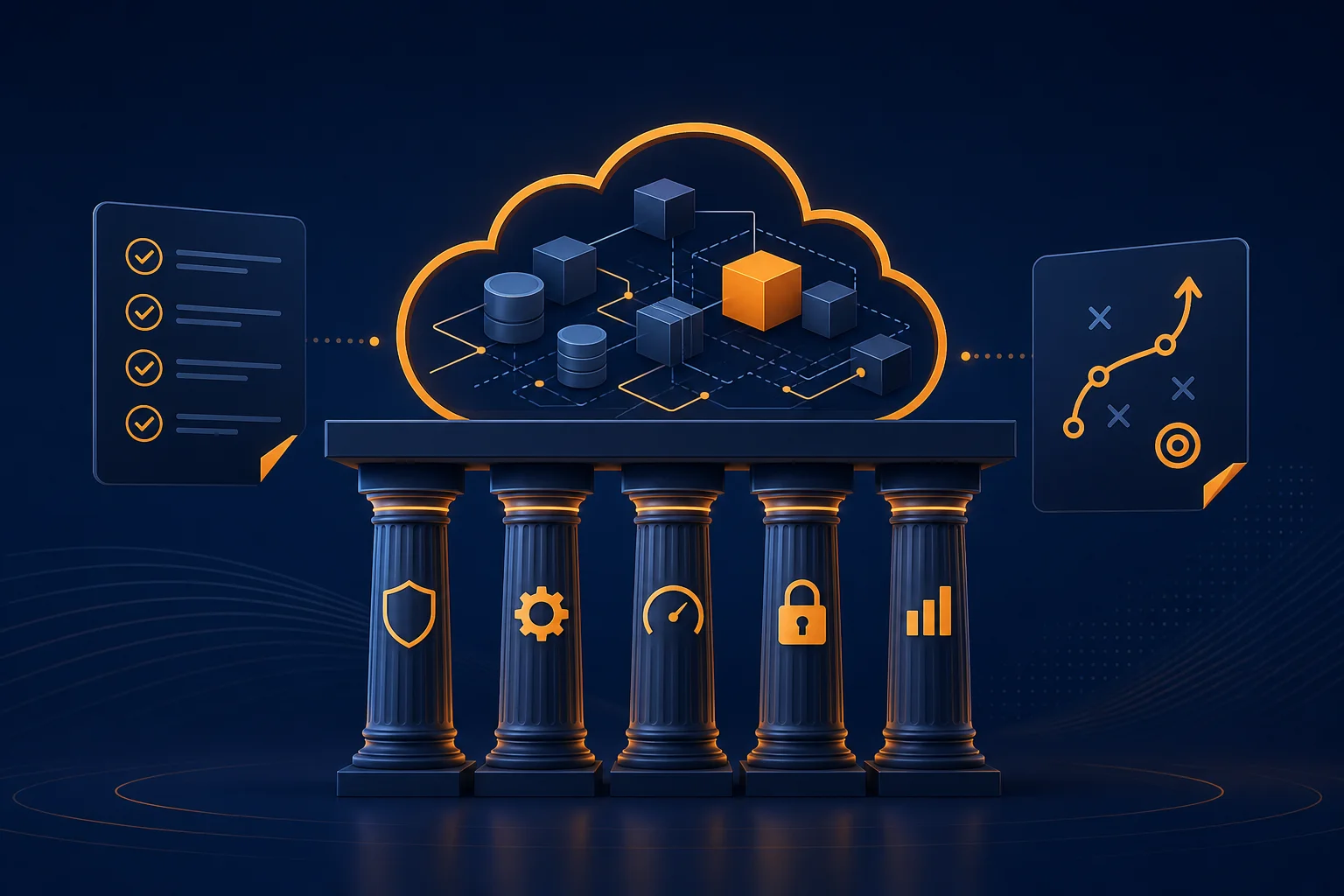
Table of Contents
The AWS Well-Architected Tool includes a Lens Catalog (SaaS, Serverless, ML, and industry lenses), custom lenses, profiles for goal-based question prioritization, and org-wide sharing via AWS Organizations, available in commercial and GovCloud (US) regions per AWS documentation. The tool is free; the cost is engineering time to answer honestly and fix High Risk Issues (HRIs).
This post is the buyer guide: when to run a review, self vs partner, deliverables, HRI caps. For the pillars, see six pillars explained. For the CAF, see the CAF practice map. For broader hiring triggers, see 12 consultant hire triggers.
Artifacts: review readiness checklist, HRI prioritization worksheet CSV.
When to run a review
| Trigger | Run now? | Review type |
|---|---|---|
| 30 days post-launch stable traffic | Yes | Self-service first |
| Pre-enterprise RFP / diligence | Yes | Partner-led |
| Post-severity-1 incident | Yes | Partner-led (Reliability focus) |
| Mid-migration week 2 | No | Wait 30 days steady-state |
| Pre-revenue MVP, no customers | Optional | Self only, low priority |
Opinionated take: Self-assess annually on every production workload; partner-led every 18 to 24 months or before material business events (fundraise, enterprise logo, acquisition).
Self-service vs partner-led
| Dimension | Self-service (Tool) | Partner-led |
|---|---|---|
| Cost | Free (engineer time) | Engagement fee |
| Duration | 4 to 8 hours spread | 1–2 workshops + report |
| Best for | Hygiene, small teams | Diligence, HRI overload |
| Deliverable | Improvement plan in console | Prioritized HRI + roadmap |
Partners bring cross-customer benchmarks; self-service is sufficient if you have a strong internal architect and ≤ 10 HRIs.
Review mechanics
- Define workload: name, owner, accounts, regions, pre-prod vs prod
- Apply Lens: SaaS, Serverless, or ML if applicable
- Create milestone before answering (baseline snapshot)
- Answer High Risk questions first: the tool surfaces these
- Cap HRIs at 5 for first 90-day plan, using the worksheet
- Assign owner per HRI. No owner means shelfware.
- New milestone after fixes or quarterly
Integrations: Trusted Advisor and Service Catalog AppRegistry shorten evidence gathering per AWS Well-Architected Tool features page.
Review frequency by stage
| Company stage | Cadence |
|---|---|
| Seed / single product | Self-assess at launch + annual |
| Series A, first enterprise | Partner-led once, then self quarterly |
| Series B+, regulated | Partner-led every 12–18 months, self quarterly |
| Post-incident | Targeted re-review within 90 days |
Pair Reliability HRIs with chaos engineering program and SLA/SLO design.
What to do this week
- List production workloads. Use one WA workload per independently deployable system.
- Run readiness checklist stages 0 to 2.
- Self-assess highest-revenue workload in AWS Well-Architected Tool.
- Export HRIs to HRI worksheet and pick the top 5.
- Book partner review only if HRIs > 15 or diligence deadline < 8 weeks.
What this post doesn’t cover
- Pillar definitions and best practices: six pillars guide.
- SOC 2 / HIPAA audit: SOC 2 checklist, HIPAA checklist.
- Custom lens authoring: AWS documentation; advanced platform team topic.
- WA Tool API automation: enterprise governance integration; separate build.
Related: Architecture review service · Managed services · Contact us
Frequently asked questions
When should we run our first Well-Architected Review?
When should we NOT run a Well-Architected Review yet?
Self-service vs partner-led — how do we choose?
How does this differ from the Well-Architected Framework pillars post?
What Lenses should SaaS and serverless workloads use?
What could go wrong after the review?

AWS Cloud Architect & AI Expert
AWS-certified cloud architect and AI expert with deep expertise in cloud migrations, cost optimization, and generative AI on AWS.